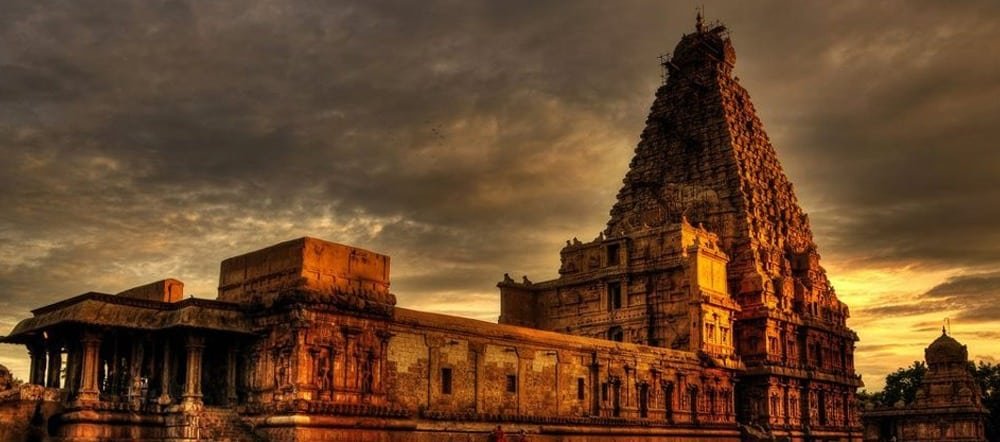
The Eternal Majesty of Thanjai Periya Kovil
In the heart of Thanjavur, embraced by the fertile embrace of the sacred river Kaveri (காவேரி), rises a temple that defies the boundaries of time — the Thanjai Periya Kovil, also known as the Brihadeeswarar Temple. Built under the visionary rule of Raja Raja Chola I in the 11th century, this stone marvel is not merely architecture but a hymn carved into granite, a cosmic dialogue between the earth and the divine.
A Historical Symphony
The Cholas were not just kings but stewards of a cultural renaissance. Raja Raja Chola I, celebrated as “Rajakesari Varman” (Protector of the Radiant Lions), envisioned a temple that would stand as the epicenter of devotion, power, and art. In the year 1010 CE, his dream manifested as the Periya Kovil, consecrated to Lord Shiva, worshipped here as Brihadeeswara — the Great Lord. The temple was not just a place of prayer but the nucleus of administration, learning, and artistry, where sculptors, poets, dancers, and scholars converged.
Architecture as Poetry in Stone
Every stone of Periya Kovil tells a tale of divine craftsmanship. Rising to over 200 feet, the vimana (tower) is a marvel of engineering that astonishes even today. The massive granite blocks used in its construction were transported across great distances, an achievement in logistics and ingenuity. The temple walls bear inscriptions chronicling the Chola dynasty’s victories, grants, and the spiritual ethos of a people devoted to dharma (தர்மம் – righteousness). At its heart, the sanctum houses the colossal Shivalinga, towering and serene, radiating the stillness of eternity.
A Cultural Tapestry
The Periya Kovil was not only a religious hub but also a cultural academy. The temple corridors once echoed with the steps of devadasis, whose Bharatanatyam (பரதநாட்டியம்) was an offering of body and soul. The sounds of nadaswaram and mridangam blended with Vedic chants, creating a harmony that resonated with the cosmic rhythm. The inscriptions reveal patronage for scholars and poets, anchoring Tamil literature and philosophy in its embrace. Food, music, dance, sculpture, and faith intertwined seamlessly here, making the temple a vibrant reflection of Chola prosperity and Tamil culture.
Spiritual Resonance
For devotees, the Periya Kovil is not just stone and mortar but a living presence. The sanctum radiates a silence that transcends time, reminding every pilgrim of the impermanence of kings and the eternity of the divine. The temple’s alignment with celestial patterns reflects the Cholas’ deep understanding of cosmic order — where architecture, astronomy, and spirituality merge into one. Even today, walking barefoot on its cool granite floors, one feels the heartbeat of centuries whispering through the air.
Reflections Across Time
The Thanjai Periya Kovil is more than history — it is heritage alive. It is a mirror of a time when power was blended with devotion, when art was worship, and when temples were not only for gods but also for people. Standing before its towering gopuram (gateway), one is humbled by the vision of a king who sought not personal glory but to etch eternity in stone. The temple today draws travelers, heritage lovers, and spiritual seekers alike, inviting them into a timeless dialogue between the human and the divine.
A Timeless Benediction
As the sun sets behind its towering vimana, casting long golden shadows across its courtyards, the Periya Kovil whispers an eternal truth: dynasties may fade, rulers may be forgotten, but what is built with faith, devotion, and dharma endures beyond time. Here, the stones breathe, the sculptures sing, and the air itself carries the fragrance of devotion — a living testimony to the spiritual grandeur of Tamil Nadu.
“In the stillness of its sanctum, I hear not just the echoes of history,
but the heartbeat of a civilization that chose eternity over mortality,
faith over pride, and devotion over conquest.”